Classification is the weakest link in automotive imports
Brokers and importers move high-volume, low-value, high-variety goods. Accuracy at part level is what protects the entry, the duty and the client relationship.
The reality of automotive parts trade
Enormous part variety
A single vehicle platform can involve thousands of distinct service parts across chapters 40, 73, 83, 84, 85 and 87. Small attribute differences change the heading.
Heavy rule load
Classification depends on the General Rules of Interpretation, Section XVII notes, explanatory notes and a large body of CBP rulings that few teams can master part by part.
Rising duty stakes
Additional tariffs and trade-agreement rules mean a wrong line is now far more expensive than a few years ago. Origin and classification both need to be right.
Fragmented responsibility
Suppliers describe, brokers classify and importers sign. Without a shared record each party reclassifies from scratch.
Reasonable care is a standard
Importers must exercise reasonable care. A documented, repeatable method is the strongest evidence that they did.
Records must last
Entry records must be retained and produced on request. Scattered spreadsheets are neither complete nor searchable.
What changes with IPAS
Without a standard
- Classification lives in individual experience and spreadsheets
- The same part gets different codes at different entries
- Supplier data is re-keyed for every importer
- No evidence of how a decision was reached
- Reviewing a backlog means starting over
With IPAS DB
- One guided method, authored once and applied consistently
- Every part resolves to one reproducible IPAS code
- Parts are imported once and shared with approved partners
- Each answer, reviewer and timestamp is recorded
- Search and export the full classification record any time
What brokers and importers get
reproducible code per classified part
people involved: classify, then review
steps from part list to verified code
accounts needed to verify a code
Designed for how compliance teams actually work
- Pre-screened ruling base: binding rulings broadly relating to automotive service parts, with analysis and opinion
- Guided, not guessed: plain-language questions replace tariff-text interpretation at the desk
- Two-person control: separation of duties between classifier and reviewer
- Shared supplier data: approved supplier-importer links, no re-keying
- Evidence by default: timestamps, authorship and the full answer path on every code
- Works everywhere: desktop, tablet and phone
Questions we hear from brokers
Does IPAS replace a licensed customs broker?
No. IPAS DB supports classification work and keeps the record. Responsibility for entries stays with the licensed broker and the importer of record.
Is it limited to automotive parts?
Yes, deliberately. Focus lets the decision trees and ruling base go deep on automotive service parts instead of being shallow across all goods.
Can customs officers or clients verify our codes?
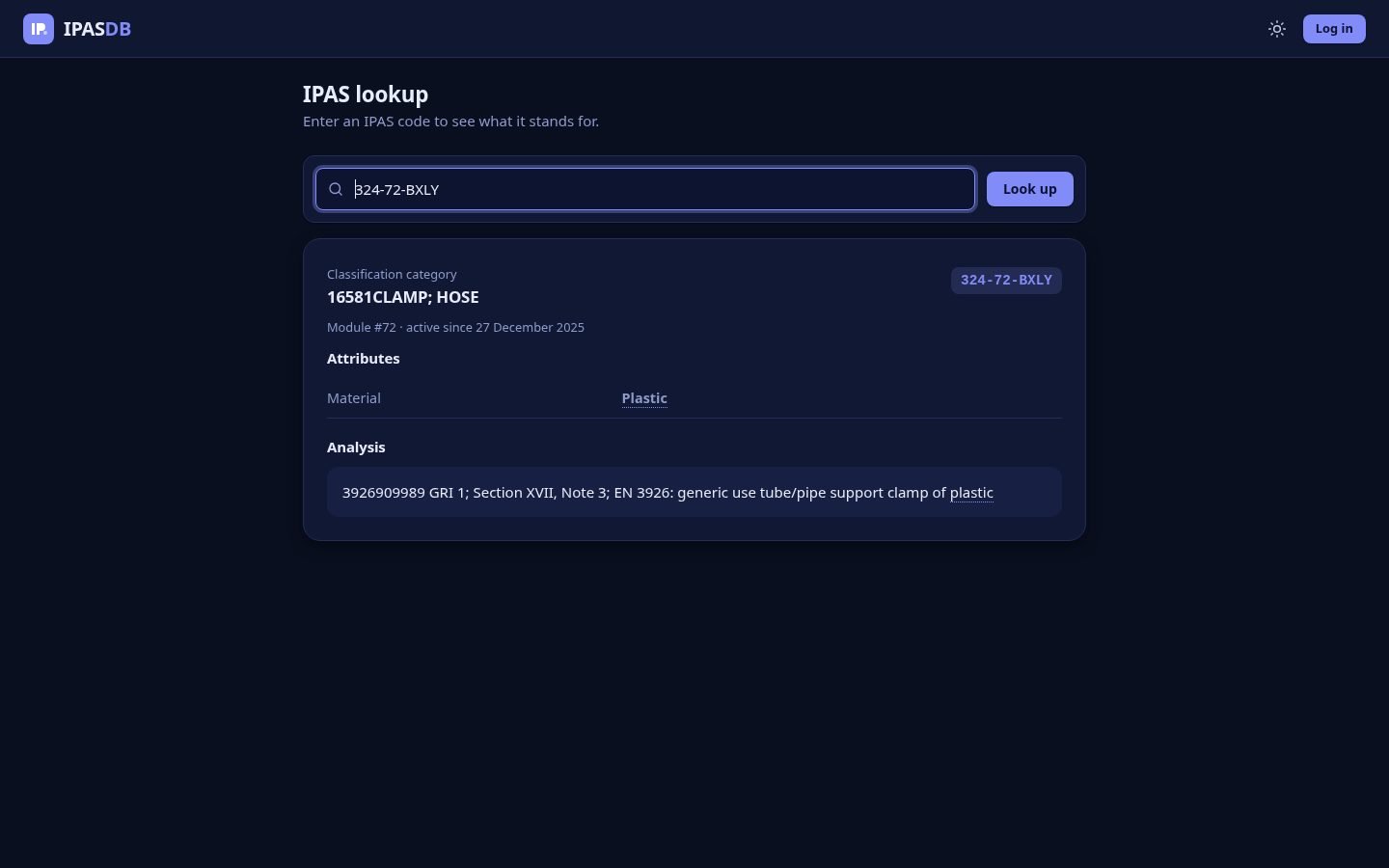
Yes. The IPAS lookup is public: enter a code and see the classification category, attributes and analysis. No account is required.
Can we bring our existing part lists?
Yes. Import Excel, spreadsheet or CSV files, keep your own column labels, and export results in the same formats.
Bring one standard to every automotive entry
Request access for your brokerage, importing company or supplier organisation. We will confirm your use case and set you up within one business day.